
The Complete Guide to Rental Yield, Capital Appreciation & High-ROI Investing
Most people searching for rental properties are really asking one question: where does my money grow fastest while still paying me every month? Dubai is one of the rare cities on earth where the answer to both halves of that question is genuinely strong — and this guide breaks down exactly why, with the numbers, the areas, and the strategy behind it.
At Aloud Properties, we help investors from the UAE, India, the UK, the USA, Russia, Australia, Hong Kong, China, and across Europe and Asia turn rental property into real, compounding wealth. Below is everything you need to understand rental yield, capital appreciation, and how to combine both into a portfolio that performs.
Why Rental Properties in Dubai Outperform Almost Every Global Market
Here’s the number that stops most international investors mid-scroll: Dubai’s average rental yield currently runs 6% to 8% gross, with top-performing apartment communities pushing past 9%. Compare that to 2–5% in London, New York, or Singapore, and the gap becomes impossible to ignore. Add zero personal income tax, zero capital gains tax, and zero annual property tax, and Dubai isn’t just competitive — it’s in a different league entirely for rental properties investors.
This is the core reason global capital keeps flowing into Dubai’s residential market: strong income, real ownership rights for foreign buyers, and a regulatory system — governed by the Dubai Land Department and RERA — built for transparency rather than guesswork.
What Is Rental Yield? (And Why Most Investors Calculate It Wrong)
Rental yield is the return your property generates from rent alone, expressed as a percentage of what you paid for it.
Gross rental yield formula: Annual Rent ÷ Purchase Price × 100
Buy a unit for AED 1,000,000, rent it for AED 70,000 a year, and your gross yield is 7%. Simple — but incomplete.
Net rental yield is the number that actually matters, because it subtracts what gross yield conveniently ignores: service charges, maintenance, property management fees, and vacancy periods between tenants. A property advertised at a flashy 9% gross yield can quietly settle at 5.5–6.5% net once real costs are factored in. A calmer 6% gross figure in a premium, low-vacancy building might land closer to 4.8–5.5% net — a far smaller gap than the headline numbers suggest.
The rule every serious buyer of rental property should live by: never commit capital based on gross yield alone. Always underwrite net.
Where the Highest Rental Yields Are Hiding Right Now
Not all rental properties are created equal, and location is still the single biggest lever on return. Here’s where the numbers are strongest today:
- Jumeirah Village Circle (JVC) — the mid-market powerhouse. Gross yields of 7–9.5%, deep and consistent tenant demand from young professionals and families, and some of the most stable occupancy rates in the city.
- Arjan & Dubai Silicon Oasis — affordable entry points paired with 8–9% gross yields, driven by strong rental demand relative to purchase price.
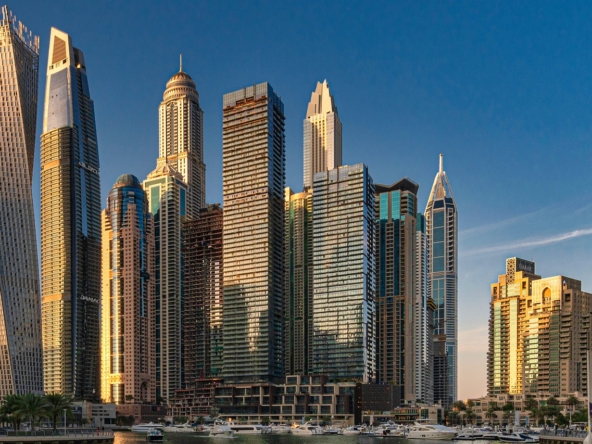
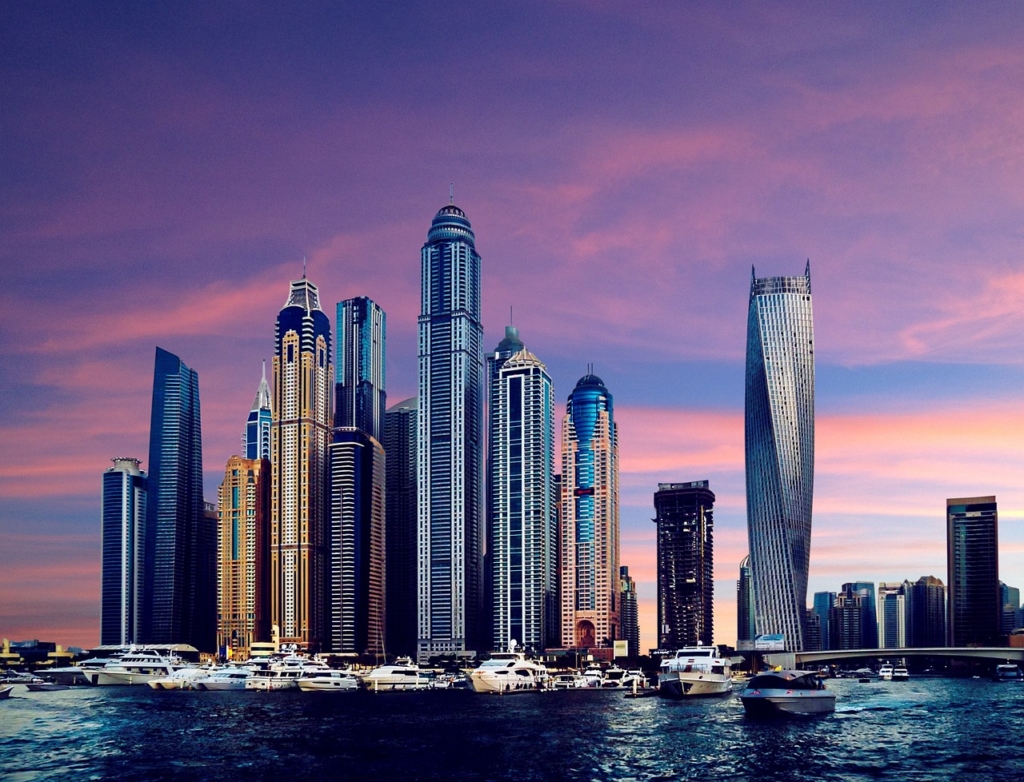
- Dubai Marina — an internationally recognized waterfront address delivering 5.5–7.2% yield alongside exceptional resale liquidity.
- Business Bay — central, corporate-tenant-driven demand producing 5.5–7.6% gross yield with canal-front appeal.
- Downtown Dubai & Palm Jumeirah — lower yields of 4–6%, but the trade-off is elite-tier capital appreciation, prestige, and the deepest resale market in the city.
Smaller units win on percentage return. Studios and one-bedroom apartments consistently produce the highest yields because rent scales faster than price at the entry level — a key insight for anyone building an income-first rental assets portfolio.
Capital Appreciation: Where the Real Wealth Is Built
Rental yield pays your bills. Capital appreciation builds your net worth. The strongest rental properties investors never treat these as separate decisions — they engineer both into a single strategy.
Prime communities — Downtown Dubai, Palm Jumeirah, Dubai Hills Estate — have delivered 6–10% annual capital appreciation through the current market cycle, and in some pockets, considerably more. Villa communities have moved even faster: constrained land supply has pushed freehold villa values up dramatically since the pandemic, far outpacing typical apartment growth. Mid-market apartment zones sit in the 4–8% range, with performance varying by how much new supply is entering the specific community.
The takeaway that changes how smart money invests: the highest-yield area is rarely the highest-appreciation area. Building true wealth in rental properties means deliberately choosing which lever — income or growth — matters more for your goals, then picking the community that’s engineered for it.
Matching Strategy to Investor Type
- Cash-flow investors — target JVC, Arjan, Dubai Silicon Oasis. Maximum monthly income, fast payback.
- Growth investors — target villas, townhouses, and prime addresses. Lower monthly yield, faster long-term equity growth.
- Balanced investors — target Dubai Marina, Business Bay, Dubai Hills Estate. Solid 5.5–7.6% yield combined with meaningful appreciation and top-tier liquidity.
The Hidden Costs That Quietly Kill Returns
Every experienced buyer of rental properties underwrites risk before chasing yield. The numbers that get ignored in glossy brochures are exactly the ones that determine real profitability:
- Service charges — vary dramatically by building and can silently erode a third of your gross yield.
- Vacancy gaps — typically 4–8 weeks between tenancies, longer in oversupplied pockets.
- New supply pipelines — fast-growing districts can face rent softening if new units outpace demand.
- Financing costs — leveraged buyers must stress-test against rate movement; a strong gross yield can turn into weak or negative net cash flow under the wrong financing terms.
- Building and location quality — determines how fast a unit re-lets and how resilient your income stream is through market cycles.
Skipping this step is the single most common mistake made by first-time investors in rental properties — and the easiest one to avoid with the right guidance.
Why International Investors Keep Choosing Dubai
- Tax-free rental income — no personal income tax on what you earn.
- No capital gains tax on residential resale.
- No annual property tax, unlike almost every mature global market.
- Golden Visa eligibility tied to qualifying investment thresholds — residency through real estate.
- Full freehold ownership for foreign nationals in designated zones, with transparent DLD title registration.
- Deep liquidity — tens of thousands of residential transactions close every quarter, meaning your exit strategy is never theoretical.
How Aloud Properties Turns This Data Into Your Investment Plan
Numbers alone don’t build a portfolio — strategy does. At Aloud Properties, we translate live market data into a personalized plan: identifying the rental properties that match your income targets, your appreciation goals, and your risk tolerance, then guiding you through selection, due diligence, financing, and long-term management. Whether you’re placing your first AED 700,000 or building a multi-property portfolio, our role is to make sure every unit you buy is underwritten on real net numbers — not marketing gloss.
Frequently Asked Questions
What is a good rental yield for rental properties in Dubai?
A strong gross rental yield sits between 6% and 8%, with a healthy net yield of 4–6% after real costs. Anything above 7% gross is considered excellent; below 5% gross is weak for a buy-to-let strategy.
What is the difference between rental yield and capital appreciation?
Rental yield is the income a property generates each year as a percentage of its price. Capital appreciation is the increase in the property’s market value over time. Total investment return combines both.
Which Dubai areas have the highest rental yield?
JVC, Arjan, Dubai Silicon Oasis, and Dubai Investments Park currently deliver some of the strongest gross yields, often between 8% and 9.5%, due to affordable pricing paired with strong tenant demand.
Do apartments or villas generate higher rental yield?
Apartments generally outperform villas on yield, averaging 6.5–7.4% gross versus 4.5–6% for villas. Villas, however, typically deliver stronger long-term capital appreciation due to land scarcity.
Is Dubai a better market for rental properties than London or New York?
Yes, on yield. Dubai’s 6–8% average gross yield significantly outperforms London, New York, and Singapore, which typically range 2–5%, while also offering tax-free rental income.
How is rental yield calculated on an investment property?
Divide annual rental income by the purchase price, then multiply by 100 for gross yield. For net yield, subtract service charges, management fees, and a realistic vacancy allowance from rental income first.
What reduces net rental yield the most?
Service charges and vacancy periods are typically the two largest deductions from gross yield, followed by property management fees and, for leveraged buyers, financing costs.
Can foreigners own rental property in Dubai?
Yes. Foreign nationals can hold full freehold ownership in designated investment zones across Dubai, with title registered directly through the Dubai Land Department.
Does buying rental property in Dubai qualify for residency?
Property purchases above certain thresholds can qualify investors for the UAE Golden Visa, linking real estate investment directly to long-term residency.
What is the safest strategy for a first-time rental properties investor?
Start with a well-located one-bedroom or studio in a high-demand mid-market community, verify net yield (not just gross), confirm the building’s service charge history, and prioritize areas with consistent, structural tenant demand over headline yield numbers alone.
How long does it typically take to re-let a rental property in Dubai?
Most units experience a vacancy window of 4 to 8 weeks between tenancies, though this varies by community, with higher-turnover mid-market areas sometimes seeing longer gaps due to increased competition.
What total return can investors realistically expect from rental property in Dubai?
Combining average rental yield (6–8%) with capital appreciation (4–10% depending on community and property type), well-selected rental properties in Dubai can realistically deliver double-digit total annual returns over a multi-year holding period.