

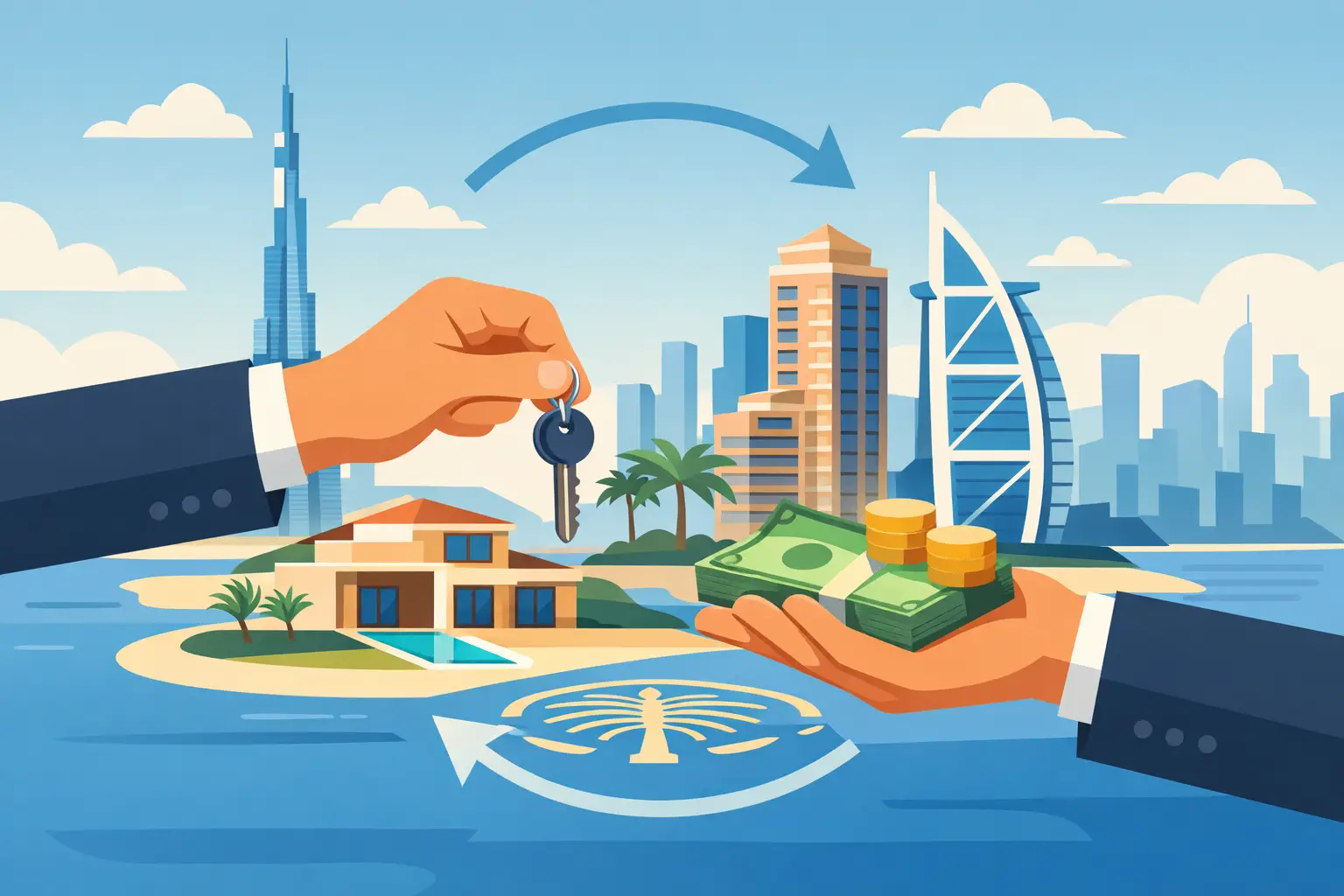
If you are asking what is Dubai property transfer fee, you are already thinking like a serious buyer. In Dubai, the headline property price is only part of the equation. The transfer fee is one of the most important transaction costs in any resale or ready-property purchase, and if you miss it in your budget, the numbers can shift fast.
For investors targeting Business Bay, Downtown Dubai, Palm Jumeirah, or other high-demand addresses, this fee is not a minor admin charge. It is a core acquisition cost tied to ownership transfer, and it directly affects your cash requirement on closing day. Whether you are buying a luxury apartment, a villa for end use, or a high-yield unit for rental income, understanding this fee helps you move with confidence and avoid expensive surprises.
What is Dubai property transfer fee?
The Dubai property transfer fee is the charge paid to the Dubai Land Department, commonly referred to as DLD, when ownership of a property is officially transferred from seller to buyer. In most cases, this fee is 4% of the property purchase price, plus smaller administrative charges.
That 4% is the figure buyers hear most often, and for good reason. It is one of the largest upfront costs in a Dubai real estate transaction. If you are buying a property for AED 2 million, the transfer fee alone is typically AED 80,000 before adding related admin costs. On a luxury asset priced at AED 5 million or AED 10 million, the amount becomes even more significant, which is why sophisticated buyers account for it early rather than treating it as a last-minute line item.
This fee is generally associated with secondary market transactions where title is transferred at the DLD trustee office. In off-plan transactions, the structure can differ depending on the developer, the project, and any promotional offers in place.
Why the transfer fee matters to investors
Dubai remains one of the most compelling global property markets for capital growth, rental income, and lifestyle-driven investment. But strong opportunities are won in the details. Purchase price, service charges, financing terms, registration costs, and transfer fees all shape your true entry point.
For cash buyers, the transfer fee affects total capital deployed. For mortgage buyers, it affects liquidity because this cost is usually paid from your own funds rather than financed as part of the loan. That means a deal that looks attractive on paper can feel very different once closing costs are added.
This matters even more in premium communities where values are higher and competition moves quickly. A buyer chasing a trophy penthouse or a waterfront residence cannot afford weak budgeting. The investors who act decisively are usually the ones who understand their total cost position from the start.
How Dubai property transfer fee is calculated
In standard terms, the Dubai property transfer fee is calculated at 4% of the agreed property value or purchase price, subject to DLD processing rules. There may also be a fixed administrative fee charged through the transfer process.
A simple example makes it clear. If a property is purchased for AED 1,500,000, 4% equals AED 60,000. If the property is AED 3,000,000, the transfer fee is AED 120,000. That is why buyers of premium real estate need a sharper cash plan than buyers expect in many other markets.
In some transactions, parties negotiate how the fee will be shared. Often the buyer covers it in full, but there are cases where the buyer and seller split the amount. That is not guaranteed, and it should never be assumed. The contract terms, the negotiating leverage of each party, and overall market conditions can all influence the final arrangement.
In a seller’s market, where inventory is tight and demand is high, buyers usually have less room to negotiate on transfer-related costs. In a softer segment, especially for certain resale units, there may be more flexibility.
Who pays the Dubai property transfer fee?
There is no single answer that applies to every transaction, but in practice, the buyer commonly pays the Dubai property transfer fee. This is the market expectation in many deals, especially when demand is strong.
That said, it depends on negotiation. Some contracts split the fee equally between buyer and seller. In certain developer campaigns, especially in off-plan sales, the developer may offer to waive or absorb part of the DLD fee as a promotional incentive. Those campaigns can create real value, but buyers should read the offer carefully. Sometimes a waived fee is part of a broader pricing strategy rather than a pure savings opportunity.
For high-intent buyers, the smartest move is to treat the fee as your responsibility unless a signed agreement clearly states otherwise. That approach keeps your acquisition strategy realistic and puts you in a stronger position to move quickly on the right property.
Other costs that come with the transfer
The transfer fee is the major one, but it is not the only closing cost. Buyers in Dubai should usually budget for additional expenses such as trustee office charges, admin fees, mortgage registration fees if financing is involved, and agency commission where applicable.
If you are buying with a mortgage, your lender may also require valuation fees and other processing costs. If you are purchasing a ready property from the secondary market, there may be service charge adjustments or seller-related clearance requirements before transfer can be completed.
This is where many first-time international buyers get caught off guard. They focus on the listing price and underestimate the liquidity needed to close. In Dubai’s fast-moving premium market, that can cost you a strong opportunity. The right property can disappear while a buyer is still trying to assemble the full amount.
Transfer fee for off-plan vs ready property
This is one area where buyers need nuance, not assumptions. In ready property transactions, the transfer fee is typically straightforward and tied to the title transfer process. In off-plan property, the payment structure may be different depending on the developer and project stage.
Some developers charge DLD-related registration fees at the time of booking. Others run limited-time offers that reduce or cover the cost. These incentives are common in competitive launches, especially when developers want to accelerate take-up in a new phase or premium tower.
That does not automatically mean off-plan is cheaper overall. A waived transfer-related fee can be attractive, but investors still need to weigh handover timelines, payment plans, resale restrictions, service charge expectations, and future market positioning. A well-bought ready asset in a proven location may outperform a heavily promoted off-plan unit if rental demand and resale liquidity are stronger.
What buyers should do before committing
Before signing anything, ask for a full cost breakdown based on the exact unit, transaction type, and payment method. Not a rough estimate. Not a verbal range. A real acquisition snapshot.
That breakdown should include the purchase price, DLD transfer fee, any trustee or registration charges, mortgage-related fees if relevant, broker commission, and expected funds required on transfer day. If the fee is being shared or waived, it should be documented clearly.
Serious buyers also benefit from asking one more question: how does this affect the investment case? On a high-yield apartment, the added entry cost changes your net return. On a lifestyle purchase in a prime district, it affects your total capital outlay and future resale breakeven point. The fee is not just a legal formality. It is part of the asset strategy.
A smart way to think about the fee
The Dubai property transfer fee is best viewed as part of the price of entry into one of the world’s most active real estate markets. It supports the formal transfer of ownership and reflects the structured framework that gives Dubai property its global appeal.
For investors and end users alike, the goal is not to avoid the fee. The goal is to price it in early, negotiate where possible, and choose assets strong enough to justify the full acquisition cost. That is how experienced buyers protect momentum and capture better opportunities.
If you are targeting Dubai real estate at any serious level, from a branded residence to a high-growth family community, clarity beats guesswork every time. The right property can build wealth, generate income, and elevate lifestyle in one move, but only when the numbers are understood before the deal is done.
In a market defined by speed, prestige, and upside, disciplined buying is what turns interest into advantage.